
From CocoaPods to Zero Dependencies
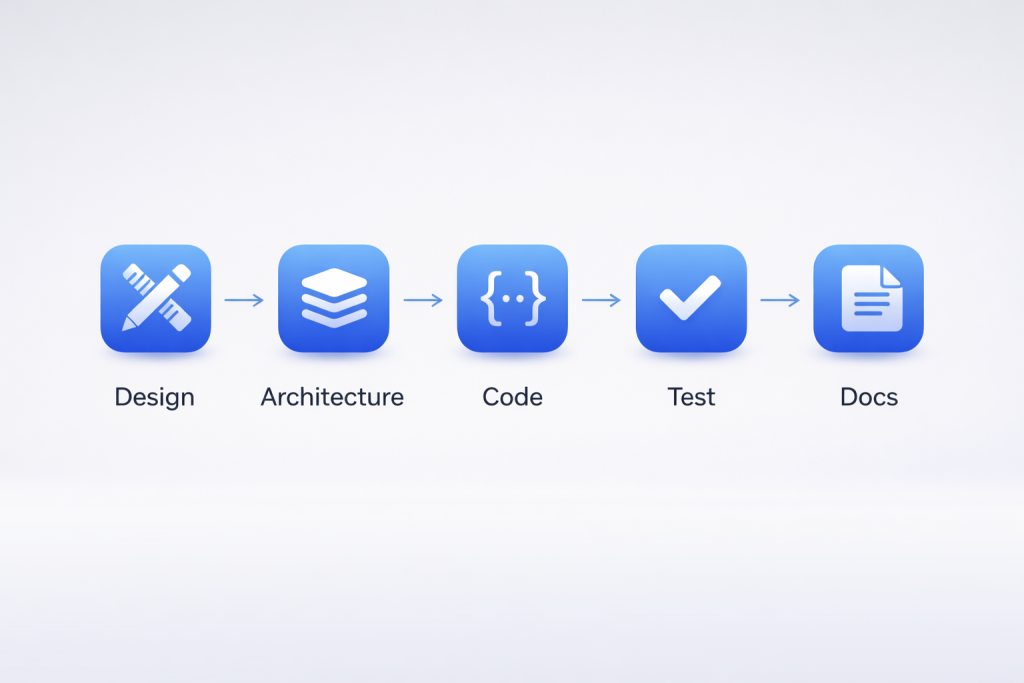
How AI Helped Me Rethink How Software Gets Built
Six years ago, I wrote a small Swift framework to fetch content from an API.
In 2026, I rewrote it from scratch.
Not because it was broken—but because the way we build software has changed.
The framework is Gathr, an iOS SDK designed to give developers a clean interface for fetching content like articles, photos, audio, video, and events through a simple API.
What began as a quick helper library eventually became something more interesting: a long-running experiment in how engineering evolves.
And the biggest shift didn’t come from Swift.
It came from AI-assisted development.
The First Version (2016)
Like most frameworks, the first version was simple.
It had:
-
A few model objects
-
A basic networking layer
-
A CocoaPods podspec
The API design was opinionated but practical:
-
Singleton access
-
Public properties
-
Closure-based async callbacks
It wasn’t elegant, but it worked.
And like most early projects, the commit history tells the real story:
-
Fixing API endpoints
-
Migrating Swift versions (3 → 4 → 4.2 → 5)
-
Improving the README
-
Refining model structures
Nothing revolutionary.
Just steady iteration.
When a Utility Becomes a Real SDK
The turning point came when real use cases appeared.
As more projects started relying on the framework, the feature set expanded:
-
Category-based filtering across content types
-
Apple TV support
-
Expanded video models with producers and episodes
-
YouTube integration
-
Notification hooks for async updates
-
Swift Package Manager support
The framework stopped being a convenience layer and started behaving like a real SDK.
But the biggest improvements came years later.
The Six-Year Refactor
Between September and November 2025, the framework went through its most focused development sprint.
The codebase gained:
-
A dedicated GathrCategory model
-
Category filtering across every content type
-
Safer optional handling throughout the SDK
-
Codable support across the model layer
-
Computed properties for episode metadata
-
A full unit testing suite using MockURLProtocol
This was the moment the project stopped being “something that works” and became something reliable.
But the next change was even bigger.
AI Became Part of My Engineering Workflow
In 2026, I started using AI as an active collaborator, not just a code assistant.
Instead of asking a single chatbot for help, I built specialized AI agents responsible for different phases of development.
Think of it like an engineering pipeline:
Requirements → Architecture → Implementation → Review → Testing → Documentation
Each stage has its own AI partner.
Requirements Planner
Defines scope and constraints before writing code.
SwiftUI Architect
Designs clean SwiftUI implementations based on requirements.
SwiftUI Code Reviewer
Reviews code for MVVM patterns, dependency injection, and Swift best practices.
Swift Test Writer
Generates comprehensive unit tests using the Swift Testing framework.
DocC Documentation Writer
Produces DocC documentation and polished README files.
This structure mirrors how engineering teams work in practice.
But instead of context switching between roles, I move through a guided workflow supported by AI collaborators.
The result isn’t just faster code.
It’s more consistent engineering.
The Rewrite That Changed the Framework
In March 2026, I made the biggest architectural decision in the project’s history.
I removed every external dependency.
Libraries like Alamofire and SwiftyJSON were replaced with a lightweight internal networking layer built entirely on native Apple frameworks:
-
URLSession
-
JSONSerialization
-
Native Codable models
The result was significant:
-
Zero external dependencies
-
Smaller binary size
-
Fewer breaking updates
-
A clearer architecture
This rewrite would normally take weeks.
Instead, it moved quickly because the process was structured.
-
Requirements were scoped first
-
Architecture was designed before implementation
-
Code review happened before commit
-
Tests were written alongside the code
AI didn’t write the project for me.
It helped enforce engineering discipline.
What Six Years of Iteration Taught Me
Building the same framework over six years changes how you think about software.
A few lessons stand out.
Dependencies Are a Loan, Not a Gift
Every dependency eventually has to be repaid—through upgrades, rewrites, or technical debt.
Tests Make Refactoring Safe
Without tests, refactoring becomes guesswork.
AI Doesn’t Replace Engineers
It amplifies engineers who already know what good looks like.
Specialized Tools Beat General Ones
An AI designed for one task consistently performs better than one designed for everything.
Your Commit History Is Documentation
Future you will thank present you.
The Bigger Shift
AI didn’t replace my development process.
It made the process explicit.
Instead of jumping randomly between coding, testing, and documentation, I now move through a clear pipeline:
Design → Architecture → Implementation → Review → Testing → Documentation
Each step has support.
Each step has structure.
And that structure is why the rewrite happened faster and with more confidence than any previous version.
The Future of Engineering Workflows
The most interesting impact of AI in software development isn’t faster coding.
It’s better workflows.
The next generation of engineering tools won’t just generate code.
They’ll help us design systems for building software.
And once you experience that shift, it’s hard to go back.
If you’re building SDKs or experimenting/using AI-assisted development workflows, I’d love to connect.